
Public Transport Guide in Prague
The public transport system in Prague is one of the best in Europe — affordable, reliable, and easy to navigate once you know how it works. In this guide, I’ll break down each mode of transport — metro, trams, and buses — including when to use each one, how ticketing works, and answers to the most common questions. Whether you’re visiting for a few days or settling in longer term, this is everything you need to get around the city with confidence.
Overview of Prague Public Transport
Prague’s public transportation system is run by the Prague Integrated Transport network — PID for short — and it covers the entire city through three main modes:
- Metro
- Trams
- Buses
Together they make up a connected system that can get you anywhere in the city.
One thing that surprises a lot of first-time visitors: one ticket covers all three modes. Hopping from the metro to a tram to a bus doesn’t require buying a new ticket each time — as long as your ticket or pass is valid, you can transfer freely between types within the time limit.
The system runs on an honor basis, meaning there are no turnstiles or barriers. But don’t let that fool you — ticket inspectors do check, and fines for riding without a valid ticket are no joke. More on that below.
Prague Metro
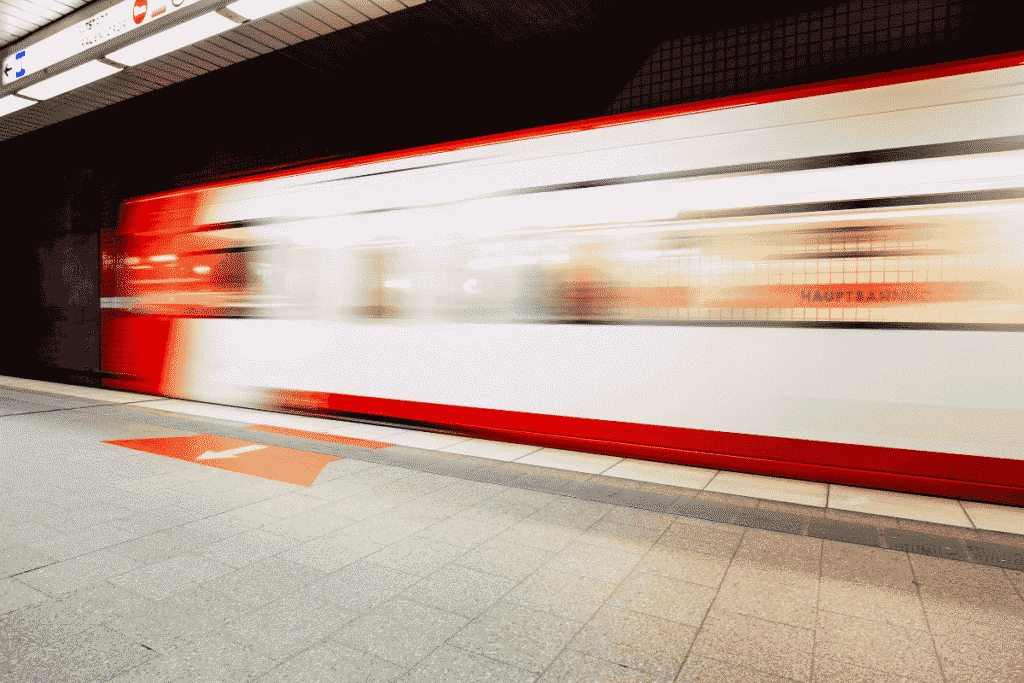
If you need to get somewhere fast, the metro is almost always your best bet. It runs underground and is completely independent from street traffic, which means there is no getting stuck behind trams or waiting at intersections — it’s the most reliable option when time matters.
The system has three lines, each color-coded and easy to navigate:
- Line A (Green) — Runs east to west and covers a lot of the tourist-heavy areas, including stops near Old Town, Malá Strana, and Prague Castle
- Line B (Yellow) — The longest line, running east to west through the city with key stops like Náměstí Republiky and Můstek
- Line C (Red) — Runs north to south and is great for connecting to the main train station and other major hubs
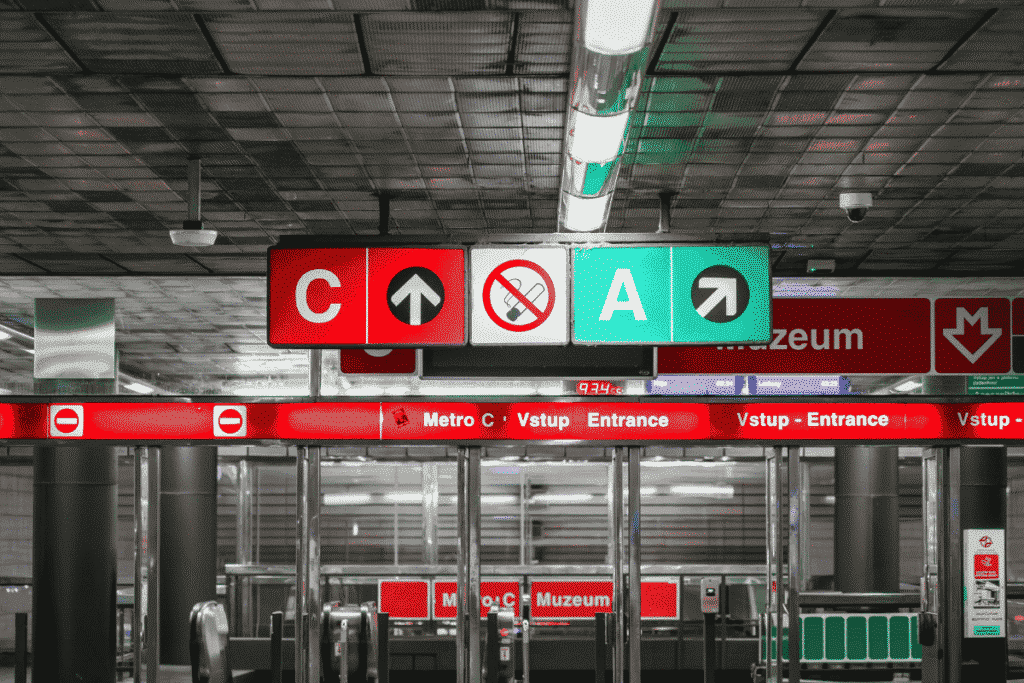
The three lines intersect at transfer stations — Muzeum (A/C), Můstek (A/B), and Florenc (B/C) — so switching between lines is straightforward once you get your bearings.
Hours and Frequency
The metro runs daily from 5:00 AM to midnight. During rush hour, trains come every 2–4 minutes, and during off-peak hours every 5–10 minutes. So no, it doesn’t run all night — but night trams and buses pick up where it leaves off, which I’ll cover in later sections.
Station Structure
Prague metro stations are pretty easy to navigate once you’ve been in one or two. Most have a single island platform serving both directions, and signs are clearly marked. One thing to note: the “paid area” begins before you reach the platform, marked by a white line on the floor. Your ticket needs to be valid before you cross it, not just before you board the train.
Now, a personal warning — the escalators are long. Like, really long. I’ll be honest, I only used the metro a handful of times during my year in Prague, and it had nothing to do with the system itself. It was those escalators. Descending into what genuinely feels like the void is not for the faint of heart — or anyone with a fear of heights. Consider yourself warned.
Prague Tram System
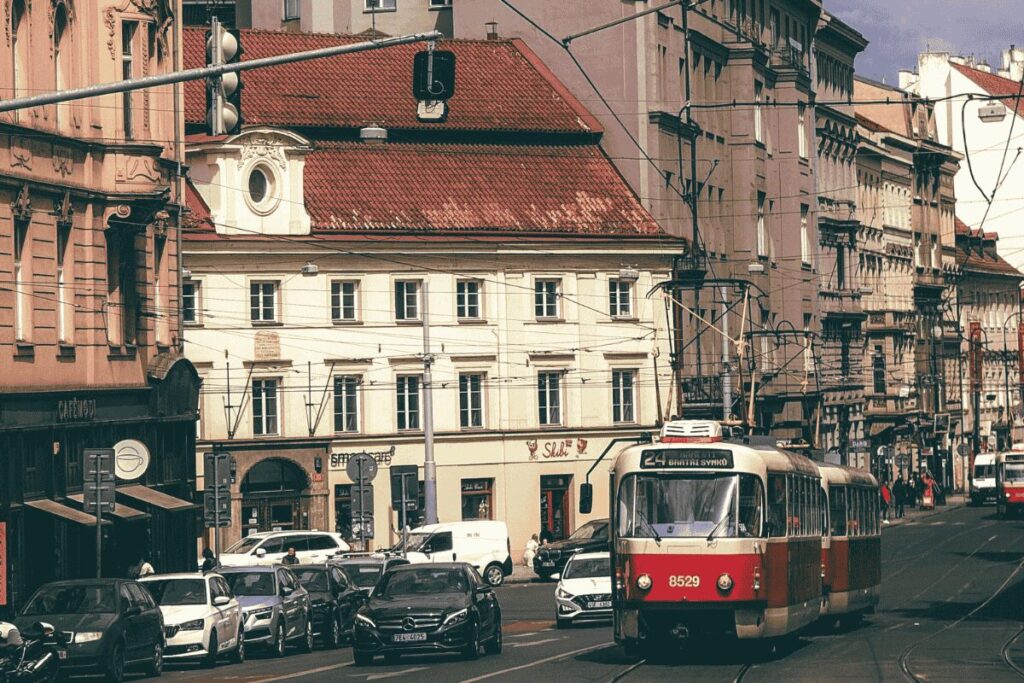
The tram was my favorite way to get around Prague — and I say that as someone who grew up in South Carolina, where a car is basically a necessity and public transport wasn’t really part of my world until my 20s. The tram system is intuitive, reliable, and runs directly through the heart of the city in a way the metro simply can’t. If you’re only going to get comfortable with one mode of transport in Prague, make it the tram.
Prague’s tram network covers over 150 km of track — one of the most extensive in Europe — with 26 daytime routes and hundreds of stops spread across the city. Whether you’re heading to a neighborhood cafe, the riverfront, or somewhere the metro doesn’t reach, there’s almost always a tram that gets you there. Stops are spaced closely together too, so even if you miss yours, you can easily hop off and walk back or catch the next one.
Hours and Frequency
Daytime trams run from around 5:00 AM to midnight. During peak hours, the busiest lines come every 8 minutes or so, and at off-peak times every 10–20 minutes. And when the metro shuts down at midnight, night trams (lines 91–99) take over, running until around 4:30 AM every 30 minutes — so you’re never completely stranded. All night tram routes converge at the Lazarská stop in the city center, making transfers easy.
Why Trams Are the Best Way to Get Around the Center
The metro is faster for longer cross-city trips, but in the historic center the tram is often the most practical way to get around. It runs above ground through old neighborhoods like Malá Strana and up towards Prague Castle, so you see the city as you go instead of riding underground. For winding cobbled streets and the hilly districts below the castle, trams typically get you closer to where you actually want to be than the metro does. One safety note: trams have the right of way and won’t stop for pedestrians, so always check carefully before crossing tram tracks — even at marked crossings.
Tram 22 — The One Everyone Talks About
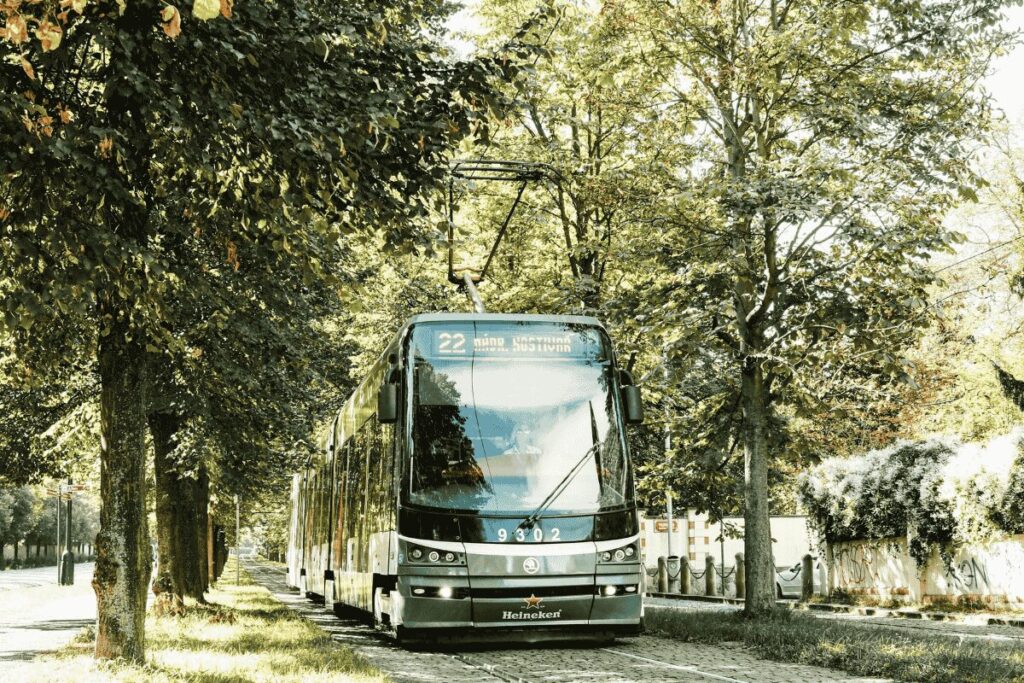
If there’s one tram line worth knowing by number, it’s Tram 22. It runs from Vinohrady through the city center, past Malá Strana, and all the way up toward Prague Castle — passing some of the most beautiful parts of the city along the way. Visitors love it as it doubles as one of the best sightseeing routes in Prague. It’s one of the most frequent lines too, so you won’t be waiting around. Note that this tram can be quite full and goes uphill especially when going to Prague Castle – so be sure to hold on!
Prague Bus System
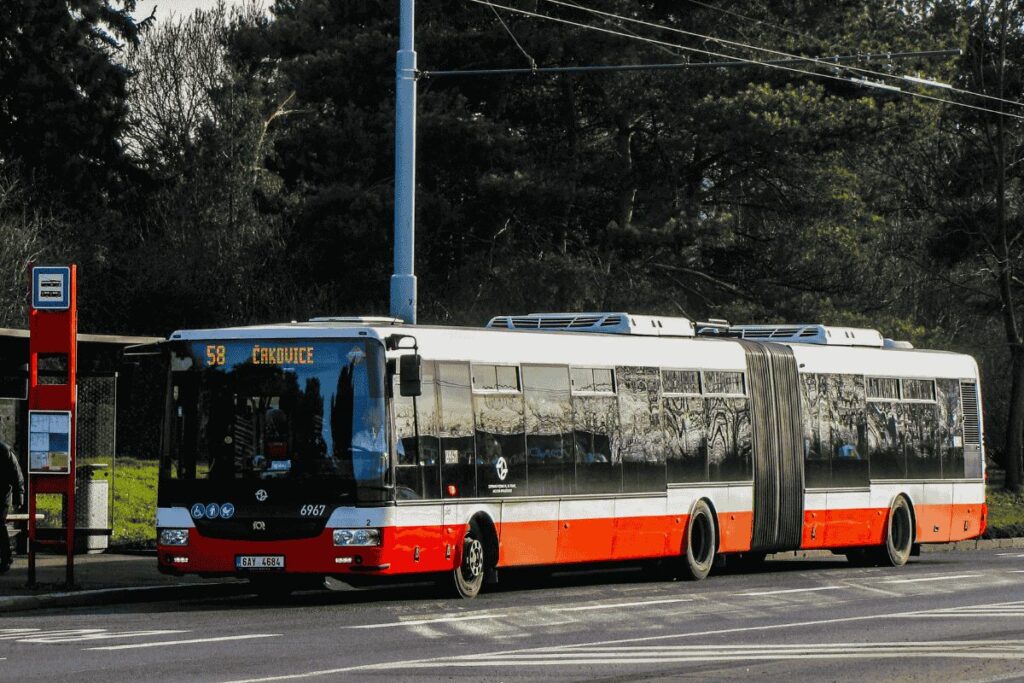
Buses are the third piece of the Prague transport puzzle, and while you might not use them as often as the metro or tram, they serve a really important purpose — getting you to the parts of the city that the other two modes simply don’t reach. Think outer residential districts, hillside neighborhoods, and yes, the airport.
Within the city, buses fill in the gaps where trams and metro lines don’t go. If you’re heading somewhere off the beaten path — a neighborhood on the outskirts, a park further from the center, or a friend’s flat in a quieter district — there’s a good chance a bus gets you there. Bus stops are clearly marked with PID bus stop signs and are easy to spot. Most routes connect back to a metro station or tram stop, so transferring between modes is straightforward. Something to remember: buses in Prague don’t automatically stop at every stop. Press the stop button before your stop if you’re getting off, and if you’re waiting at a bus stop, make sure you’re visible so the driver knows to pull over.
Hours and Frequency
Daytime buses run from around 4:30 AM to midnight, with frequency varying by route — busier routes run every 6–8 minutes during peak hours, and every 15–30 minutes off-peak. When the metro closes at midnight, night buses (numbered 901–917) take over alongside the night trams, running every 30 minutes until around 4:30 AM and covering routes across the city. Your regular PID ticket is valid on night buses, so no need to buy anything separate.
Getting to the Airport
If you’re flying in or out of Václav Havel Airport, the most common public transport option is Bus 119 — though it’s worth knowing that as of March 2024, it was replaced by Trolleybus 59 on the main airport route. Both run between the airport and Nádraží Veleslavín station on Metro Line A, taking about 15–20 minutes. From there, you can hop on the metro using the same ticket. You can read a full breakdown of airport transport options in my Prague Airport to City Center Guide.
How It All Connects
One of the things that makes Prague’s bus network so functional is that it’s designed to feed into the metro and tram system rather than compete with it. Most bus routes terminate at or near a metro station, so you’re rarely more than one transfer away from getting where you need to go.
How to Buy Prague Transport Tickets

There are two main ways to buy tickets for Prague public transport: digitally through the PID Lítačka app, or in person using a ticket machine or shop. Both use the same ticket types, though buying through the app is slightly cheaper — more on that below.
Using the PID Lítačka App
The app is hands down the easiest option, especially if you’re staying in Prague for more than a day or two. You can buy tickets and passes directly from your phone, no cash or Czech language skills required. I used it for my entire year in Prague and never looked back. For a full step-by-step walkthrough of how to download, set up, and buy tickets through the app, check out my complete PID Lítačka guide here.
Buying Physical Tickets
If you prefer a paper ticket, you can buy one from ticket machines at metro stations and many tram stops, or from ticket offices and some newsstands. Older/button machines print tickets that you must validate exactly once in a yellow stamping machine before entering the metro or right after boarding a tram or bus; stamping more than once makes the ticket invalid. Tickets bought from modern touchscreen machines or on‑board card terminals have the start time printed on them and do not need additional stamping.
Ticket Types and Passes
Prague tickets are time-based rather than journey-based, meaning one ticket covers as many transfers as you can make within the time limit. Options include a 30-minute ticket, a 90-minute ticket, a 24-hour ticket, and a 72-hour ticket. For longer stays, monthly, quarterly, and annual passes are also available — a great option if you’re living in Prague or visiting for an extended period. Passes can be purchased through the PID app or at select ticket offices. Ticket prices vary slightly depending on whether you purchase digitally or in person — see the breakdown below.
| Ticket Type | PID App (CZK) | PID App (USD) | Paper Ticket (CZK) | Paper Ticket (USD) |
| 30 minutes | 36 CZK | ~$1.76 | 39 CZK | ~$1.90 |
| 90 minutes | 46 CZK | ~$2.25 | 50 CZK | ~$2.44 |
| 24 hours | 140 CZK | ~$6.83 | 150 CZK | ~$7.32 |
| 72 hours | 340 CZK | ~$16.60 | 350 CZK | ~$17.08 |
Prices based on basic fare. USD conversions are approximate based on current exchange rates and will vary.
FAQ
Are tickets checked on public transport? Yes, and this is important to know. Plainclothes ticket inspectors check regularly on trams, buses, and the metro. If you’re caught without a valid, activated ticket the fine is steep. Always make sure your ticket is validated before you board, and if you’re using the PID app, activate your ticket before stepping on.
What is the best way to get around Prague? For most trips, public transport is going to be your best bet — it’s affordable, reliable, and covers almost everywhere you’d want to go. A good rule of thumb is to start with Google Maps, which integrates seamlessly with Prague’s transport network and will show you exactly which metro, tram, or bus to take. Worth mentioning too: Prague’s city center is incredibly walkable, so for shorter distances you may not need transport at all.
Is there Uber in Prague? Yes! Uber operates in Prague and is a reliable option for getting around the city. Bolt is another popular alternative and is often slightly cheaper. If you’re looking for a full breakdown of private transport options in Prague — including taxis and ride-share apps — my guide on private transport is coming soon!
What is the most accessible form of transport in Prague? The metro is generally considered the most accessible option, with elevators at many stations and clearly marked routes. That said, accessibility across the network varies — some tram stops and older metro stations have limited access. For detailed accessibility information including barrier-free travel options, check out the DPP’s (Prague’s city-owned public transit operator) dedicated accessibility guide.
Final Thoughts

Still not sure which option is right for your situation? Here’s a quick breakdown to help you decide at a glance.
| Option | Best For | When to Use It |
| Metro | Fast cross-city travel | Getting across the city quickly |
| Tram | City center, sightseeing, everyday use, night travel | Exploring the center, scenic routes |
| Bus | Outer districts, airport, night travel | Reaching areas metro/tram don’t cover |
For most trips around Prague, public transport is going to be your best friend — it’s affordable, reliable, and covers almost everywhere you’d want to go. Once you get the hang of it, navigating the city really does become second nature. If you’d like to dive deeper into other transport options in Prague, I’ve linked my related guides below.
More Prague Transport Guides
Have questions or want to share your experience? Drop a comment below — I’d love to hear how you found getting around Prague! Was it easy to figure out, or did it take a little trial and error? And if there’s anything I didn’t cover, feel free to send me a message directly.