A Guide to Prague’s Neighborhoods
Prague is one of those cities that seems straightforward until you actually start planning. There are the obvious Prague neighborhoods — Old Town, New Town, the castle district — but layer on top of that the Prague 1, Prague 2, Prague 3 numbering system, and suddenly a simple question like “where should I stay?” has about fifteen different answers.
This guide is designed to cut through that. I spent over a year living in Prague, and I’ve covered a lot of ground — on foot, by tram, and at more café tables than I can reasonably count. What I found is that where you stay shapes your whole experience of the city, not just your commute time to the Charles Bridge. The right neighborhood for a romantic long weekend looks different from the right neighborhood for a solo trip on a budget, or a family with kids who need space and a quieter street.
So rather than ranking neighborhoods, this guide walks you through different Prague neighborhoods, what each one actually feels like, and who each one suits. If you’re not sure where to start, take the quick quiz below — it’ll narrow your options down to two or three based on your travel style, trip length, and priorities. Then read those sections in full. You don’t need to know Prague inside and out before you arrive. You just need to find your neighborhood.
Short on Time?
Short on time? Take the quick quiz below to make a shortlist of which Prague neighborhoods might fit your trip best. You can use the table of contents to jump to any neighborhood you’re interested in.
Which Prague Neighborhood Fits Your Travel Style?
Answer a few quick questions and I’ll point you toward the Prague neighborhood that may suit your trip best.
A note on districts: Prague is divided into numbered municipal districts, and you’ll see these constantly when searching for accommodation. But they’re administrative boundaries, not a ranking — Prague 1 isn’t “better” than Prague 5, it’s just closer to the historic center. Here’s a rough cheat sheet:
- Prague 1 — Old Town, most of New Town, Malá Strana, Josefov, Hradčany. The historic core — most central, most visited, most expensive.
- Prague 2 — Vinohrady, Vyšehrad, southern edges of New Town. Still very central, more residential.
- Prague 3 — Žižkov, eastern Vinohrady. Local, affordable, good transport.
- Prague 5 — Smíchov, Anděl. West of the river, well-connected, underrated.
- Prague 7 — Holešovice, Letná. North of center, creative and up-and-coming.
The numbers jump around geographically, so Prague 6 isnt automatically “further” than Prague 3. Use this guide as your reference, not just the district number.
Old Town (Staré Město)
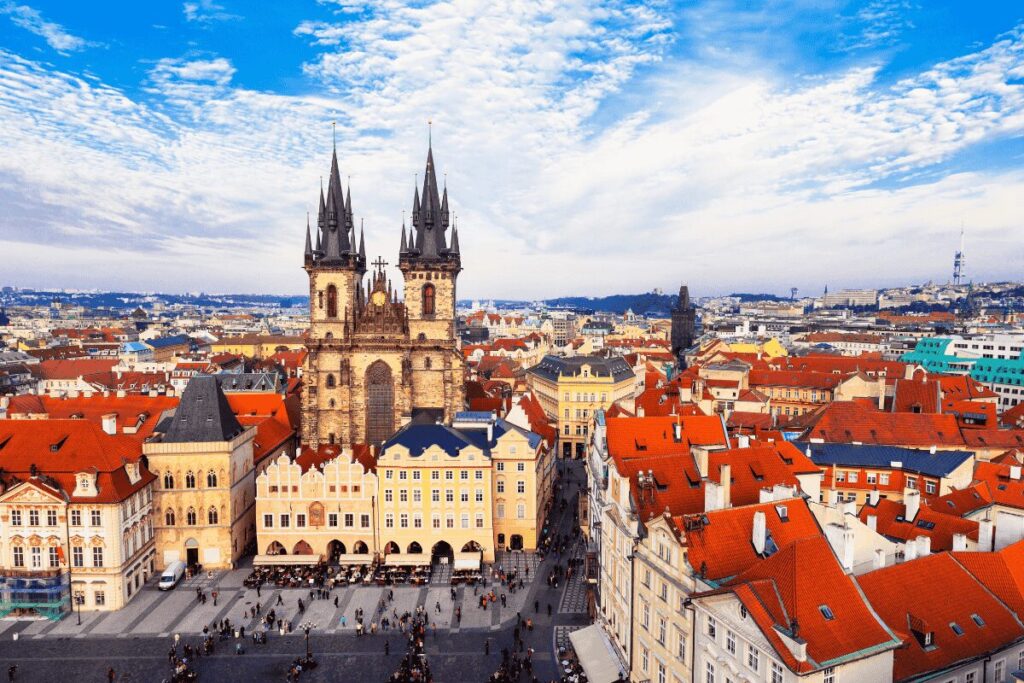
If there’s one neighborhood every first-time visitor to Prague has already heard of, it’s this one. Old Town is the historic heart of the city — cobblestoned, medieval, and beautiful — sitting on the right bank of the Vltava with the Charles Bridge at its western edge and the Jewish Quarter of Josefov folded into its northern corner. It’s the Prague of the postcards. It’s also the Prague of selfie sticks, $8 beers, and souvenir shops selling matryoshka dolls that have nothing to do with the Czech Republic. Both things are true.
Pros
- You can walk to almost every major sight directly from your front door — Charles Bridge, the Jewish Quarter, Wenceslas Square, and many more
- Incredible architecture on virtually every block; even getting lost feels rewarding
- Huge range of accommodation options from boutique hotels to apartments
- Well connected by metro (Staroměstská, Můstek) and multiple tram lines
Cons / Good to know
- Accommodation prices are usually higher than the rest of the city
- Very touristy — expect crowds at the Astronomical Clock, Charles Bridge, and Old Town Square year-round
- Restaurant quality in the immediate tourist center is inconsistent; you’ll pay more for less if you don’t know where to look
- Stag parties and bachelor groups are a regular feature, particularly on weekend nights
Where to stay
Old Town has a strong mix of boutique hotels, design hotels, and private apartments — it’s one of the best-supplied areas in the city for accommodation variety. Prices reflect that. Expect to pay a premium compared to neighborhoods like Vinohrady or Karlín for a similar standard of room. The upside is that you’re already there — no metro time to factor in, no tram to catch before a morning tour. If your trip is short and sight-heavy, that convenience has real value.
Food, cafés, and things to do
- Old Town Square is the obvious anchor — the Astronomical Clock draws crowds on the hour, but the square itself is worth lingering in, especially early morning before the tour groups arrive (pictured at the beginning of section)
- Powder Tower sits just off Old Town Square and marks one of the original gateways into the city; you can admire the Gothic facade from outside for free, and for more historic spots nearby, check out my Historical Sites for Free Guide.
- Dlouhá Street has some of the better restaurants in the area (Lokál is a reliable local-style Czech pub that holds its own despite the tourist proximity)
Stay here if you…
- Are visiting Prague for the first time and want to wake up already inside the postcard
- Have three days or fewer and want zero commute between your hotel and the sights
- Are traveling with someone who won’t compromise on location and wants the most central option possible
- Don’t mind paying more for the convenience of being at the center of everything
Malá Strana (Lesser Town)
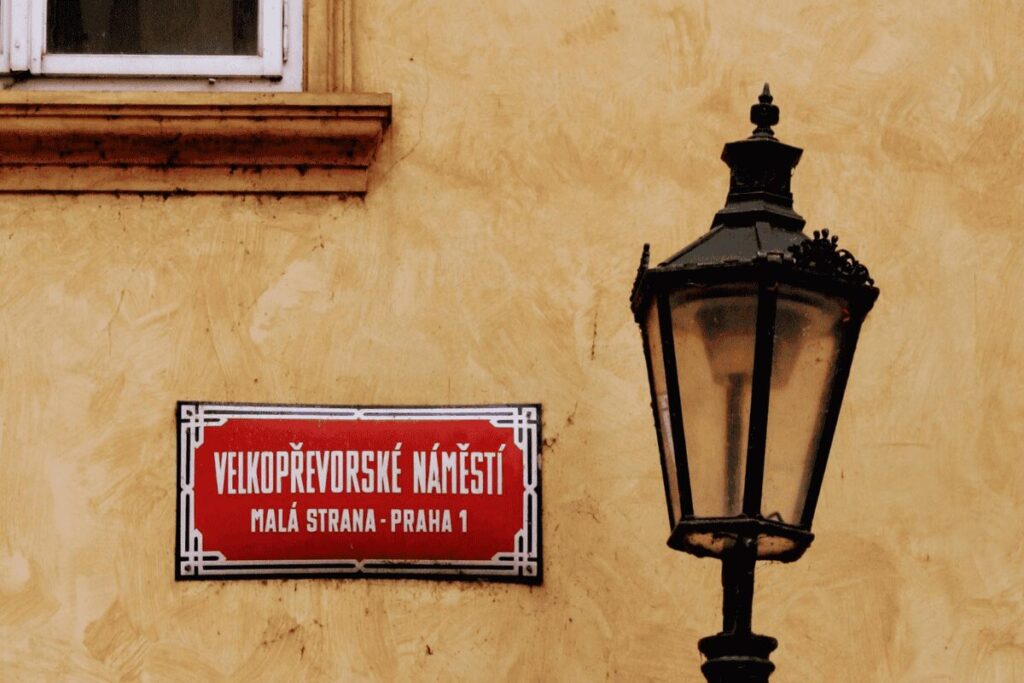
Malá Strana sits on the west bank of the Vltava, directly below Prague Castle, and it might be the most photogenic neighborhood in Prague. If you’re looking for baroque palaces, hidden garden courtyards, and one of the best views of the Charles Bridge you’ll find anywhere — you’ll find that here. Smaller and quieter than Old Town with a more residential feel, it draws a different kind of visitor: people who want beauty without quite as much noise. The atmosphere is romantic and slower-paced, with far fewer stag parties and much more candlelit dinner energy. The castle looming overhead gives the whole neighborhood a slightly dramatic quality that doesn’t wear off quickly.
Pros
- Immediate access to Prague Castle and the Hradčany area above
- The Charles Bridge is right there — you can cross it in either direction and be somewhere interesting within minutes
- Gorgeous baroque gardens, many of which are free or low-cost to enter. Read more about it in my Free Gardens in Prague Guide.
Cons / Good to know
- Hilly — if you’re staying toward the castle end of the neighborhood, expect a workout getting home after dinner
- Accommodation options are more limited than Old Town and tend to book out faster, particularly in summer
- Fewer grocery stores and everyday amenities than more residential neighborhoods
Where to stay
Malá Strana has a mix of boutique hotels, guesthouses, and apartments, with several characterful properties in historic buildings that are hard to find elsewhere in the city. Prices are high but generally slightly below Old Town for comparable options.
Food, cafés, and things to do
- The baroque gardens — Vrtbovská zahrada, Waldstein Garden — are among the most beautiful green spaces in the city
- Nerudova Street is the main climb toward the castle, lined with historic houses each marked with a symbolic sign instead of a number
- Café Savoy on Vítězná is one of the best café and brunch spots in Prague, just at the southern edge of the neighborhood
- Kampa Island, accessible from the Charles Bridge, is a quiet riverside pocket with a park, a modern art museum, and good views back toward the Old Town waterfront
Stay here if you…
- Are traveling as a couple and want the most romantic base in the city
- Have already seen the main Old Town sights and want something with a different atmosphere
- Don’t mind a little extra walking — and some of it uphill
- Want to feel like you’re staying in historic Prague without being in the loudest part of it
New Town (Nové Město)
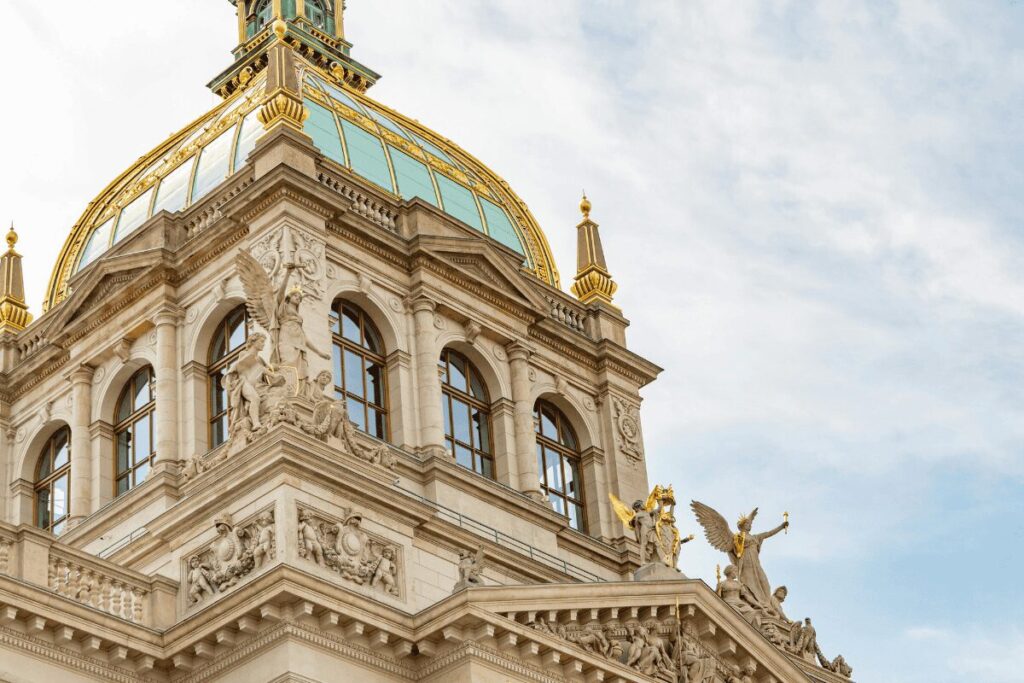
New Town is the neighborhood I called home during my time in Prague, and when my family came to visit, it’s where they stayed too. It’s the kind of area that makes sense for almost every type of visitor. It’s the most livable of the central neighborhoods: less performatively historic than Old Town, less hilly than Malá Strana, and far more connected to the rhythms of actual Prague life. Wenceslas Square runs through its heart — more grand boulevard than pretty square, and a useful orientation point — with the National Museum anchoring its upper end and Můstek at the bottom bleeding into Old Town. It’s busy, central, and practical in the best possible way.
Pros
- Extremely central without the full tourist saturation of Old Town
- Excellent metro and tram connections — Můstek, Muzeum, and Náměstí Míru stations all sit within easy reach
- A much wider range of everyday amenities than Old Town or Malá Strana — supermarkets, pharmacies, local restaurants, coffee shops that aren’t priced for tourists
- You’re within walking distance of Wenceslas Square, National Museum, the State Opera, and the main shopping streets
- Easy access to both Old Town (a short walk) and Vinohrady (a short metro or tram hop)
- A good mix of accommodation types across a range of price points
Cons / Good to know
- Wenceslas Square itself has a complicated personality — beautiful and historic at one end, a little rough around the edges at the other, particularly late at night
- Not as immediately atmospheric as Old Town or Malá Strana; the architecture is more mixed and the streets wider
- Can feel more transactional than charming — it’s a working part of the city, which is mostly a pro but occasionally feels less romantic than the historic neighborhoods
Where to stay
New Town offers some of the best value for a central Prague location — you’re paying less than Old Town prices while still being within walking distance of most major sights. Hotels range from international chains around Wenceslas Square to smaller boutique properties on the quieter side streets. Apartments are plentiful and well-priced relative to the location.
Food, cafés, and things to do
- The National Museum at the top of Wenceslas Square has impressive permanent collections — worth a visit even on a short trip (pictured at the beginning of section)
- Café Louvre on Národní třída is a Prague institution — grand, high-ceilinged, and great for a long breakfast
- Náplavka, the riverside farmers market and embankment stretch, is a short walk away and one of the best spots in the city on a sunny weekend morning
- The Dancing House (Tančící dům) is at the southwestern edge of the neighborhood and one of the most photographed buildings in modern Prague
More Prague Food & Drink Guides
Stay here if you…
- Are visiting with family and need easy access to sights without the full Old Town price tag
- Plan to use public transport to get around and want metro access right on your doorstep
- Are staying for more than a few days and want everyday amenities close by
- Want the flexibility of being close to both the historic center and more local neighborhoods like Vinohrady
Vinohrady
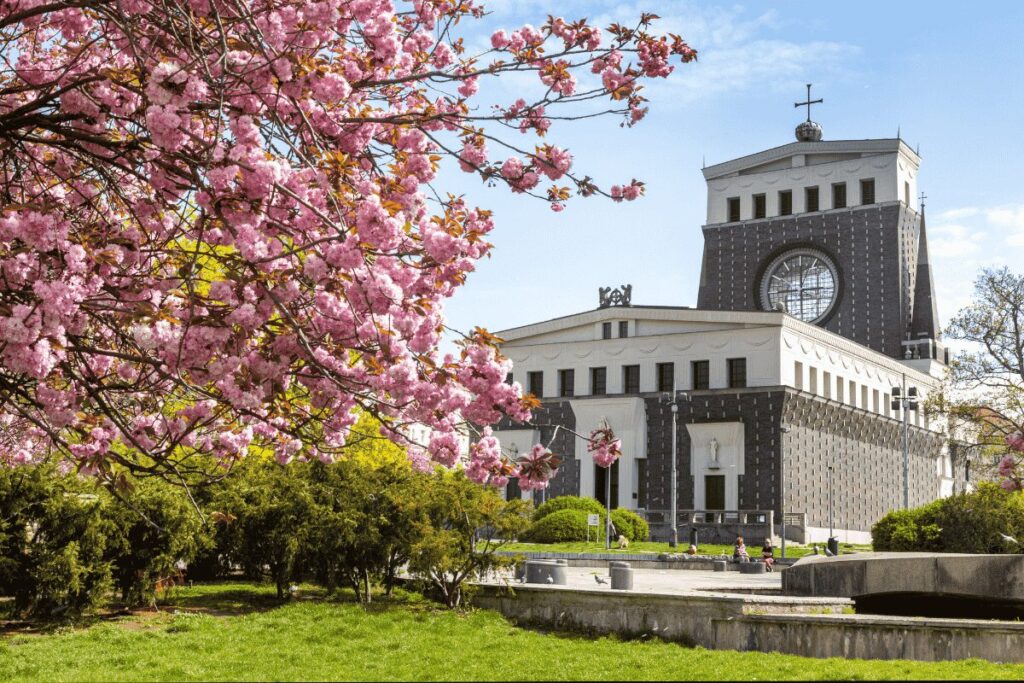
If there’s one neighborhood that comes up again and again when expats and long-term visitors are asked where they’d actually want to live in Prague, it’s Vinohrady. Wide, tree-lined avenues, beautiful late 19th-century apartment buildings, and an abundance of cafés and wine bars — it has a lot going for it. For visitors, it sits in an interesting middle ground: far enough from Old Town to feel like a real neighborhood, close enough that the center never feels out of reach. It’s the kind of area where you can have a slow morning coffee, walk to a park, and still make it to the Charles Bridge in twenty minutes.
Pros
- Riegrovy sady is one of the best parks in Prague, with a famous beer garden that has views across to the Old Town and castle. Read more in my Parks in Prague Guide.
- Excellent café and restaurant scene, skewing local rather than tourist-facing
- Quieter and more residential at night than Old Town, while still having plenty of evening options
Cons / Good to know
- No major sights on your doorstep — you’re here for the lifestyle, not the landmarks
- Can be slightly hilly depending on which part of Vinohrady you’re in, particularly toward Žižkov
Where to stay
Vinohrady has a solid mix of hotels, boutique properties, and apartments — more variety than people often expect from a residential neighborhood. Prices are noticeably lower than Old Town for comparable quality and space.
Food, cafés, and things to do
- Náměstí Míru is the neighborhood’s main square — the Church of St Ludmila anchors it, and the surrounding streets have some of the best brunch and café options in the city
- Riegrovy sady beer garden is a Prague institution, particularly on warm evenings when half the neighborhood seems to migrate there for the view
- The wine bar scene along Mánesova and the surrounding streets is strong — Vinohrady takes its name from the vineyards that once covered the area, and the wine culture has stuck
- Jiřího z Poděbrad square has a farmers market and a relaxed, neighborhood feel that’s very different from the tourist-heavy center. I talk more about farmers markets in Prague in my Free Unique Things to Do & See in Prague (see my full Prague for Free series below)
- The Church of the Most Sacred Heart of Our Lord near Jiřího z Poděbrad is a striking modernist church known for its massive clock tower and distinctive brick facade (pictured at the beginning of section)
Stay here if you…
- Want a base that feels like real Prague life rather than a hotel corridor to the sights
- Are staying for more than a few days and want cafés, parks, and a neighborhood to settle into
- Are traveling solo or as a couple and prioritize atmosphere and everyday livability
- Are happy to take the metro or tram to the main sights rather than walking out your front door
- Want good value for a central-ish location without sacrificing quality or character
More Prague for Free Guides
Žižkov
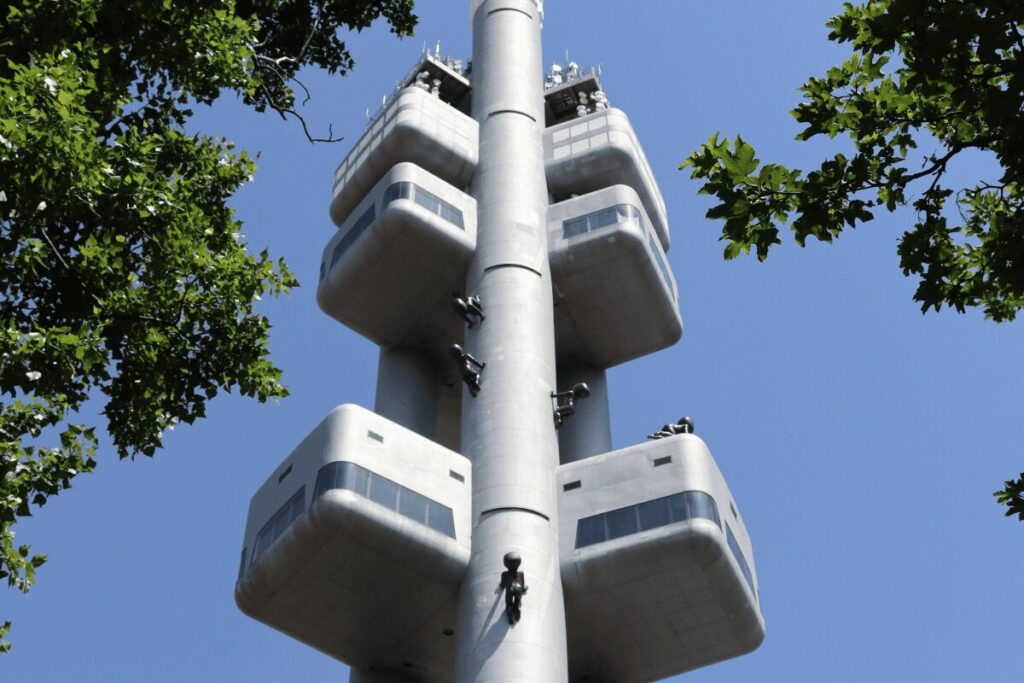
Žižkov is Prague’s most stubbornly individual neighborhood — famously rebellious, and home to more pubs per capita than almost anywhere else in the city. It sits just east of Vinohrady, close enough to share a border and a metro line, but with a completely different personality. Where Vinohrady is elegant and leafy, Žižkov is grittier, steeper, and considerably more interesting after dark. It’s been gentrifying slowly for years without losing its edge, which is a difficult balance to strike. The giant equestrian statue of Jan Žižka on Vítkov Hill — one of the largest bronze statues in the world — watches over the whole neighborhood and sets the tone perfectly: outsized, defiant, and not particularly concerned with what anyone else thinks.
Pros
- Some of the best value accommodation in a genuinely central location — you’re one or two tram stops from Vinohrady and a short metro ride from Old Town
- A bar and pub scene that is authentic, affordable, and extremely varied — from old-school Czech pivnice to creative cocktail bars
- The Žižkov Television Tower is one of Prague’s most distinctive landmarks, with a observation deck and a one-of-a-kind restaurant
- Residential and local-feeling without being remote — this is a neighborhood where people actually live
- Less polished than neighboring areas, which depending on your travel style is either a pro or a con
Cons / Good to know
- Hilly — some streets are steep enough to be genuinely tiring, particularly toward the Vítkov end of the neighborhood
- Less immediately attractive than Vinohrady or the historic center; the streetscape is more mixed and some blocks feel rough around the edges
- Fewer cafés and restaurants in the daytime compared to Vinohrady — this neighborhood comes alive more in the evening
- Not the easiest area to navigate on foot if you don’t know it — the street layout is less intuitive than the grid-like parts of New Town or Vinohrady
Where to stay
Žižkov has a growing number of hotels and aparthotels alongside private apartment rentals, with prices that represent some of the best value for a central Prague location. It’s not as well supplied as Old Town or Vinohrady but options have expanded considerably in recent years. T
Food, cafés, and things to do
- The Žižkov Television Tower dominates the skyline and is hard to miss — the observation deck offers some of the best panoramic views in Prague, and the crawling baby sculptures on its exterior are as strange and memorable as advertised (pictured at the beginning of section)
- Vítkov Hill and the Jan Žižka statue are worth the climb for the views over the city and a sense of the neighborhood’s history
- Pub crawling is practically a local sport — U Sadu, Bukowski’s, and the cluster of bars around Bořivojova Street represent the neighborhood at its most characterful
Stay here if you…
- Are on a budget and want a central location without paying Old Town or Vinohrady prices
- Travel for the local bar and nightlife scene and want to be already in the middle of it
- Have been to Prague before and want something with more local character than the historic center
- Don’t mind hills and a neighborhood that prioritizes personality over polish
Karlín

Karlín has had one of the most dramatic transformations of any neighborhood in Prague. Devastated by the catastrophic 2002 floods that submerged much of the area, it spent years in recovery before emerging as arguably the most exciting neighborhood in the city. Today it’s polished, walkable, and packed with good restaurants, independent coffee shops, and design-forward businesses — without having fully lost the grid-like, residential bones that make it easy to navigate and pleasant to live in. It sits just north of Žižkov and east of the center, close enough to feel connected but far enough to have its own identity. If Vinohrady is Prague’s established favorite and Žižkov is its rebellious sibling, Karlín is the one that showed up recently, got everything right, and is slightly annoying about it.
Pros
- One of the best restaurant and café scenes in the city — Karlín has attracted some of Prague’s most interesting independent food and coffee businesses
- Flat and extremely walkable compared to Žižkov or Malá Strana — the grid layout makes navigation straightforward
- Strong creative and design community — galleries, concept stores, and independent businesses have set up here in significant numbers
Cons / Good to know
- Has gentrified rapidly, which means prices — for accommodation, food, and coffee — have risen accordingly and no longer represent the bargain they once did
- Can feel slightly quiet in the evenings compared to Žižkov or Vinohrady — the daytime café culture is strong but the nightlife scene is more lowkey
- Still some construction and renovation activity on certain blocks as restoration continues
Where to stay
Karlín has seen a real expansion in accommodation options over the past few years, with several well-regarded boutique hotels alongside apartments. It’s not as well supplied as Old Town but the quality of what’s available is high and prices are reasonable relative to the location.
Food, cafés, and things to do
- Great coffee scene — Můj šálek kávy on Křižíkova is a fantastic specialty coffee shops in the neighborhood
- The restaurant strip along Sokolovská and the surrounding blocks has enough variety to keep even a week-long stay interesting — Czech, Italian, Vietnamese, natural wine bars, brunch spots
- Terminal Karlín is a casual street‑food courtyard on Sokolovská, with rotating Asian and Mexican stalls, bao buns, and local beers – an easy spot for dinner or drinks without leaving the neighborhood
- Karlínské náměstí hosts a regular farmers and street-food market (Karlín Market), with coffee stalls, hot lunches, and local producers – an easy way to sample the neighborhood in one stop
Stay here if you…
- Want a neighborhood with excellent food and coffee as a baseline, not a bonus
- Like the idea of a walkable, flat neighborhood that doesn’t require a map after day two
- Want good value relative to quality without going full budget — Karlín hits a sweet spot
- Are interested in a side of Prague that doesn’t appear on most first-timer itineraries
Holešovice & Letná
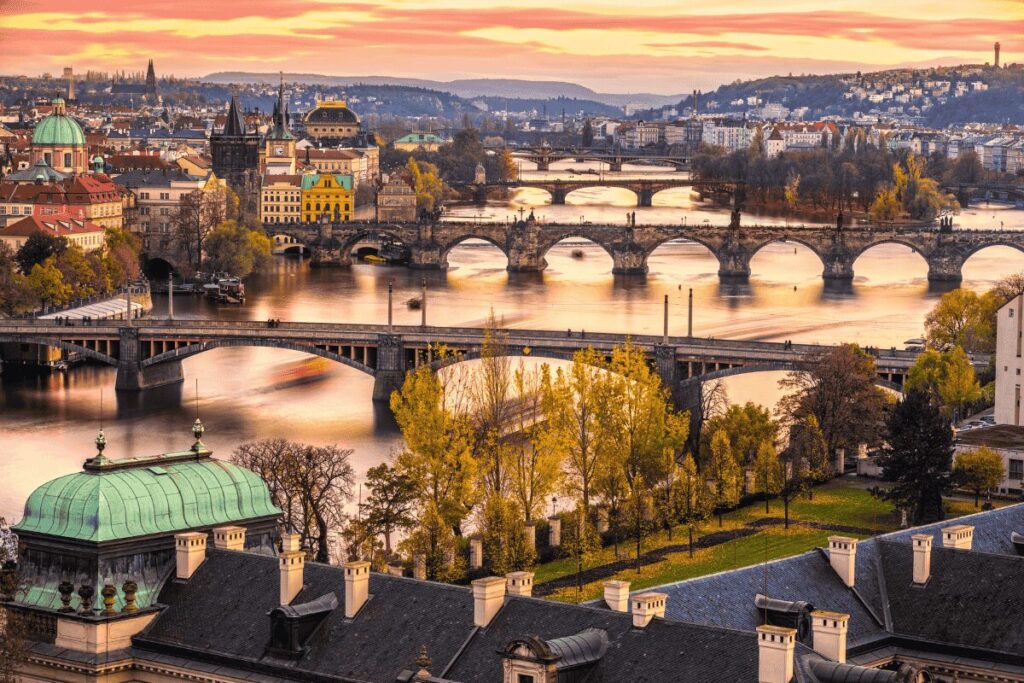
Holešovice and Letná sit side by side in Prague 7, north of the center on a bend in the Vltava, and while they’re often grouped together they have distinct personalities worth knowing before you book; Holešovice is the scrappier of the two — a former industrial district that has held onto its warehouse bones while filling them with art spaces, market halls, and creative businesses. Letná is quieter and more residential with good transport links, and one of the best parks in the city running along its southern edge. Together they make a compelling case for staying north of the center, especially for visitors who have seen the main sights and want something with more texture.
Pros
- DOX Centre for Contemporary Art and the Holešovice market hall (Tržnice) are among the most interesting cultural destinations in the city outside the historic center
- Letná Park is exceptional (view point pictured at the beginning of section) — long, elevated, and lined with chestnut trees, with a beer garden that has one of the best views of the river and Old Town below
- The industrial aesthetic of Holešovice gives it a creative energy that feels distinct from anywhere else in Prague
- Tram connections are strong from both neighborhoods, and Nádraží Holešovice on metro line C connects the area to the city center quickly
- Accommodation prices are lower than the historic center and even Vinohrady or Karlín in many cases
- A genuinely local atmosphere — far fewer tourists than anywhere on the right bank historic neighborhoods
Cons / Good to know
- Further from the main sights than any other neighborhood on this list — Old Town is 20–30 minutes by tram or metro depending on where you’re staying. I’ve linked my Prague transport series below if you have any questions on how to get around in Prague
- Holešovice in particular can feel sparse in places — the industrial scale of some blocks means long stretches between points of interest
- Letná’s plateau location means a climb from the river and tram stops below, which catches some visitors off guard
- Fewer accommodation options than more established visitor neighborhoods, though this is changing
- Less immediately intuitive for first-timers who don’t know the city — you need to know why you’re here to get the most out of it
Prague Transport Guides
Where to stay
Both neighborhoods have a mix of apartments and smaller hotels, with Holešovice offering more options overall as development has accelerated in recent years. Prices are among the most competitive for a non-peripheral Prague location.
Food, cafés, and things to do
- Letná Beer Garden at the western end of Letná Park is one of those Prague spots that is hard to leave once you’re there — the view alone justifies the visit
- The Holešovice market hall (Tržnice Praha Holešovice) hosts a weekend farmers market and food vendors that draw locals from across the city
- DOX Centre for Contemporary Art is one of the best contemporary art spaces in Central Europe
- Cross Club, a multi-level bar and club built from industrial salvage, is one of Prague’s most unique nightlife venues and sits right in Holešovice
- The riverside path below Letná Park connects toward the center and makes for one of the best walks in the city on a clear day
Stay here if you…
- Have been to Prague before and want a base with creative energy and local atmosphere over postcard proximity
- Are interested in contemporary art, design, and a neighborhood still finding its shape
- Want competitive prices without ending up somewhere peripheral or poorly connected
- Are fine with commuting 20–30 minutes to the main sights
- Plan to spend meaningful time in Letná Park and want it on your doorstep
Smíchov (Anděl)
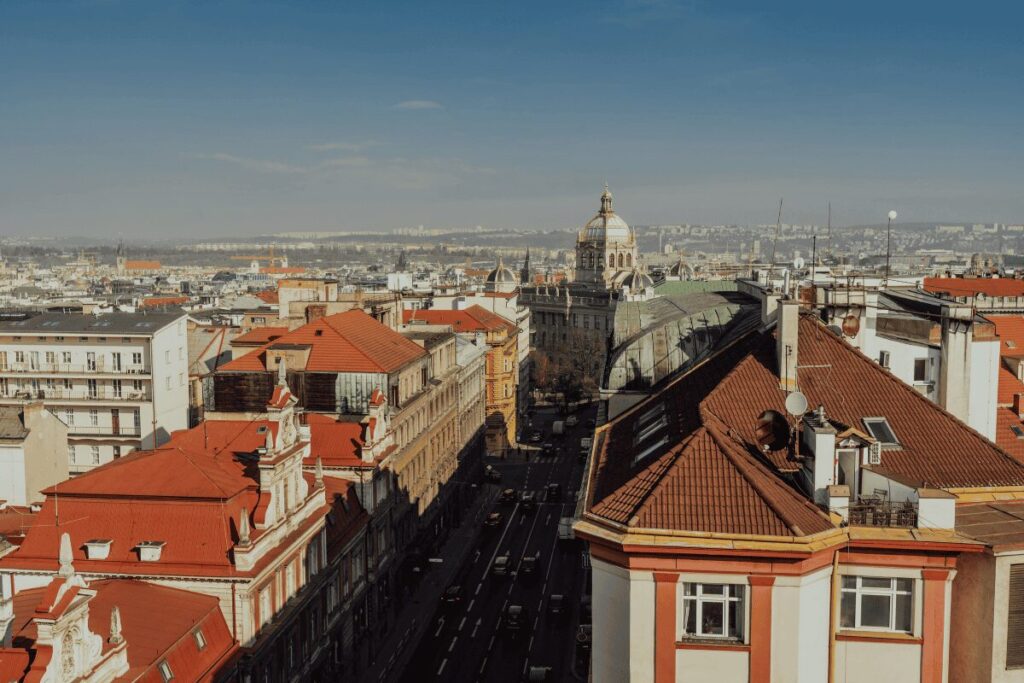
Smíchov is Prague’s most underrated central neighborhood, and the one most likely to surprise visitors who end up there by accident rather than design. Sitting on the west bank of the Vltava just south of Malá Strana, it’s a neighborhood of two halves: the older, more residential streets climbing the hills to the west, and the modern Anděl district centered on the metro station of the same name — all glass office buildings, shopping centers, and multiplex cinemas. Neither half is particularly pretty in the conventional Prague sense, but together they make one of the most functional, well-connected, and genuinely livable bases in the city. It’s where a lot of Prague residents actually do their shopping, catch a film, and get on with daily life.
Pros
- Anděl metro station sits on line B, connecting directly to the center (Náměstí Republiky in four stops) and to the main train station (Hlavní nádraží via line C at Florenc)
- Some of the best everyday amenities in the city — large supermarkets, pharmacies, shopping centers, and services that the historic center simply doesn’t have
- Accommodation prices are lower than the historic center and comparable to Žižkov for similar quality
- The older residential streets west of Anděl have a quiet, unhurried quality that contrasts well with the commercial bustle below
Cons / Good to know
- The Anděl commercial district is functional rather than atmospheric — if you’re looking for cobblestones and baroque facades, you won’t find them here
- The hillier western parts of the neighborhood can feel disconnected from the Anděl hub depending on where you’re staying
- Less of a café culture scene than Vinohrady or Karlín — Smíchov is practical first, charming second
Where to stay
Smíchov has a solid range of hotels clustered around the Anděl area, alongside apartments in both the modern and older residential parts of the neighborhood. Prices are competitive and the metro connection makes the location more central than it might initially appear on a map.
Food, cafés, and things to do
- Manifesto Market is right in the neighborhood — container bars, street food, international cuisines, and outdoor seating that draws a young local crowd in the warmer months
- Švandovo divadlo (Švanda Theatre) is one of Prague’s most respected repertory theatres and sits right in the neighborhood
- The Staropramen brewery is based in Smíchov and offers tours — not essential, but a solid option for a rainy afternoon
Stay here if you…
- Want a well-connected base with metro access and don’t need to be in the historic center
- Are traveling on a mid-range budget and want good value without going too far out
Final Thoughts
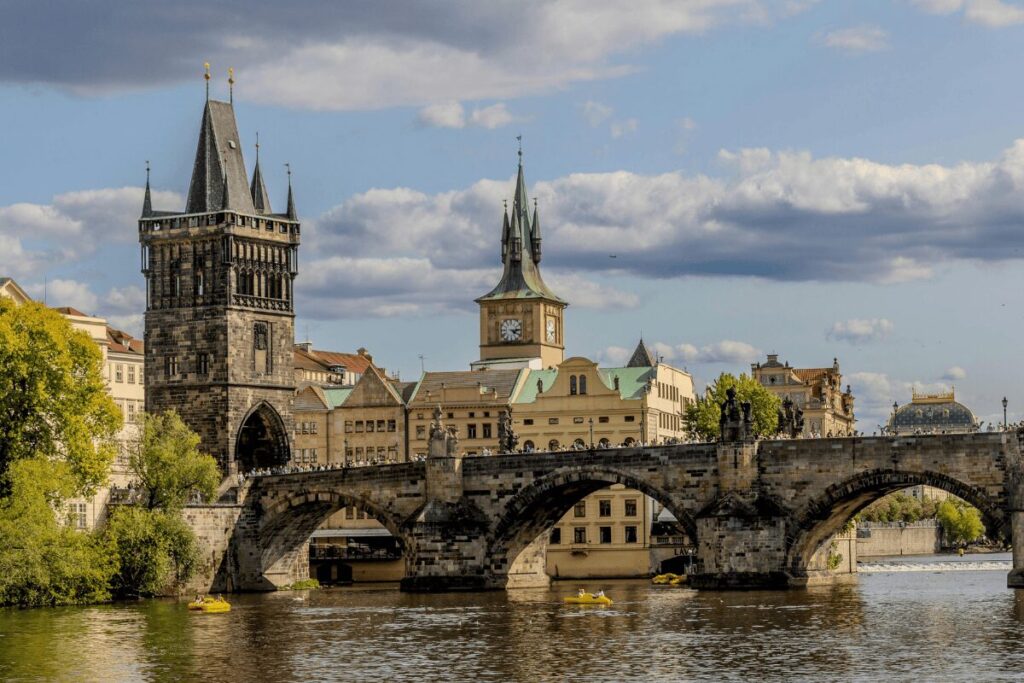
If you’ve read this far and still aren’t sure which Prague neighborhood to choose, here are three defaults that work for most visitors depending on what kind of trip you’re planning:
Short trip, first time in Prague → Old Town or New Town. You’ll pay more, but the convenience of being central is real when you only have a few days and want to walk everywhere.
A week or longer, want to feel like you live there → Vinohrady or Karlín. Both are well-connected, beautiful, and have enough cafés, restaurants, and parks to sustain a longer stay without feeling like you’re camping out in a hotel corridor.
Romantic trip, atmosphere is everything → Malá Strana. It’s the most beautiful base in the city for a reason, and the slightly higher price and limited amenities matter a lot less when you’re only there for a few days and happy to wander.
Explore more of Prague
This guide covers where to stay — but there’s a lot more to planning a Prague trip. Here are a few posts that pair well with this one:
- Getting around: Prague Transport Guide: Trams, Metro, and Getting Around the City
- Free things to do: Prague for Free: Historical Sites and Landmarks / Prague for Free: Gardens / Prague for Free: Art and Culture / Prague for Free: Parks / Prague for Free: Unusual Things to See & Do
- Where to eat and drink: Prague International Food Guide / Best Cafés in Prague