Prague for Free: Historical Sites
Welcome to my Prague for Free series — this time, we’re diving into history, and Prague absolutely delivers. Medieval fortresses, Baroque churches, bridges with centuries stories, and squares where revolutions actually happened, all just sitting there waiting for you to discover.
If you’re new here, I’m Anne — former Prague resident and the person behind this Prague for Free series. Here I break down the best experiences the city has to offer without spending a cent. I lived in Prague and pair that experience with extensive research to create these guides. The goal is simple: make your trip planning easier.
This guide walks you through Prague’s best free historical sites and landmarks. They’re organized by theme so you can plan around what interests you most. That might be medieval fortifications, iconic bridges, or sites that shaped modern Czech history. No entry fees, no catches.
Want more free things to do in Prague? Check out my other guides: Free Art in Prague, Free Gardens in Prague, and Free Parks in Prague.
Short on Time?
Short on time? I’ve linked all of the sites mentioned below on a google map for easy navigation.
Medieval Power & Fortifications
Prague Castle Complex
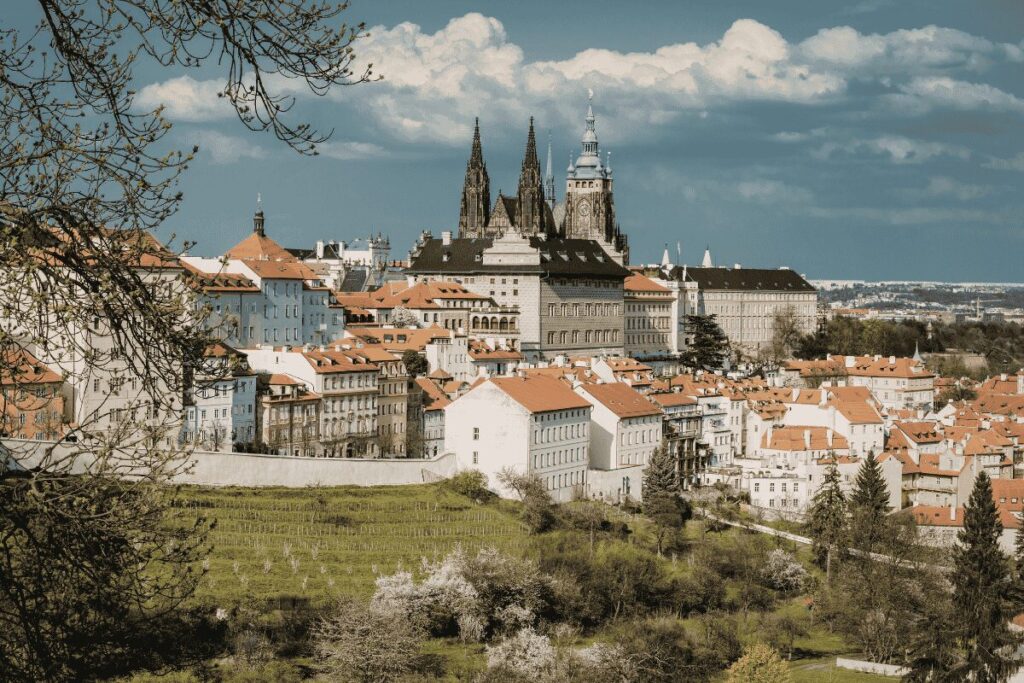
Prague Castle sprawls across the hilltop above the city and has been a center of Czech political and cultural life for over a thousand years. Many people visiting don’t know you can actually see much of Prague Castle complex for free.
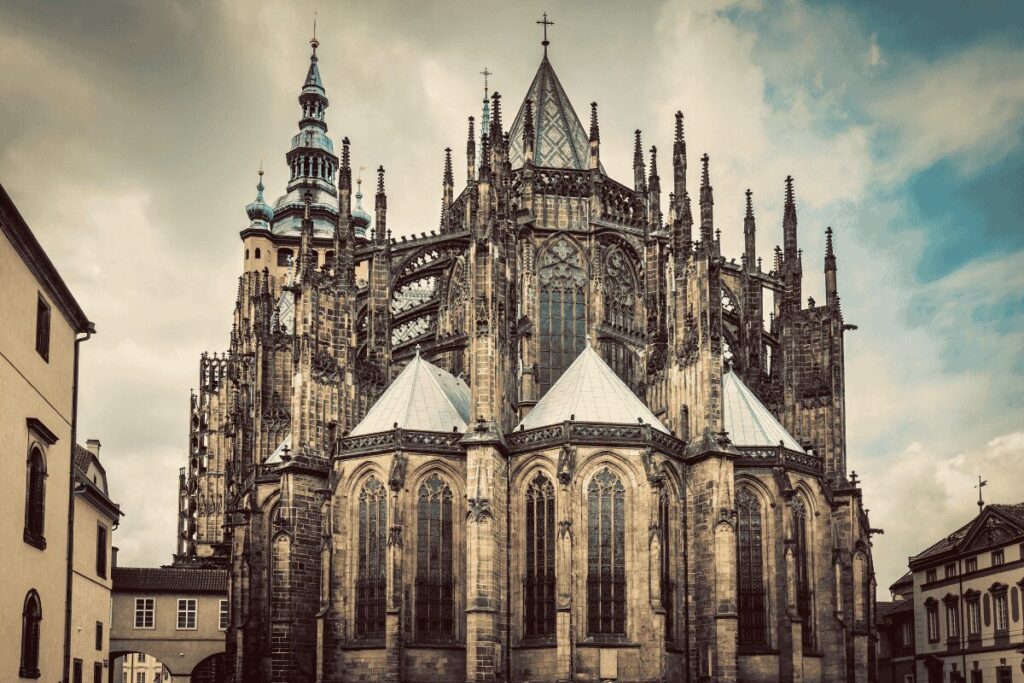
The free access is more generous than you would expect. You can wander the courtyards and take in St. Vitus Cathedral from the outside. Golden Lane is also free entry in the late afternoon, aftert 4 or 5 pm depending on the season. The paid exhibitions are there if you want them, but honestly? I did them when I visited in December and came away feeling the free parts would have been plenty.
A word of warning if you’re going in peak season — some of the paid experiences can get overwhelming. The cathedral interior was so packed when I visited that it felt claustrophobic. Golden Lane had serious human-sardine vibes too.
Don’t leave without catching the Changing of the Guard at the entry to the complex — it runs on the hour every hour, with a bigger ceremony at noon, and it’s completely free.
Free access includes: courtyards, St. Vitus Cathedral exterior, Golden Lane (free entry in late afternoon — timing varies by season)
Powder Tower
Some landmarks lose their magic once you see them every day. The Powder Tower is not one of them. I lived close enough to walk past it on my way to the grocery store.
It never stopped feeling remarkable on an ordinary Tuesday afternoon.
The tower dates back to the late 15th century and once served as a gate to Old Town. It also marks the start of the Royal Route. Czech kings followed this ceremonial path to Prague Castle for their coronations. The name comes from its time when it was used for gunpowder storage, which is a very Prague way of repurposing a medieval city gate.
Viewing from the outside is completely free, and that’s honestly all you need. If you catch it at sunset, the stone takes on this warm glow that makes it look almost unreal. Entering the tower and accessing the viewing gallery requires a ticket. But even from street level, you’re seeing one of Prague’s classic sights.
Squares and Civic History – Old Town Square
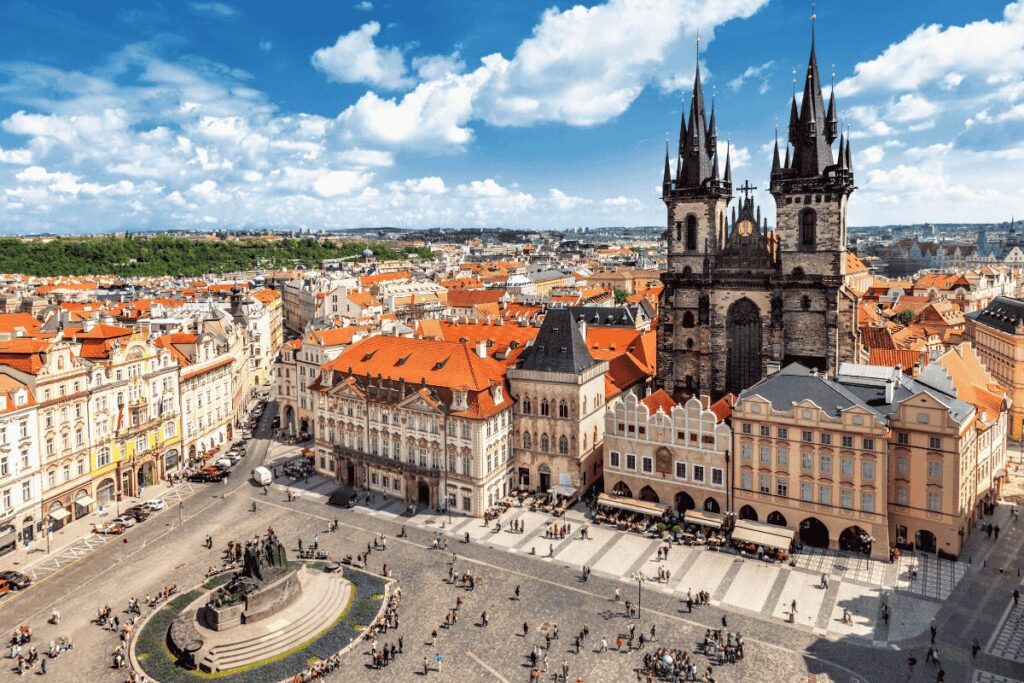
Old Town Square is the beating heart of Prague’s tourist trail, and for good reason. As a local it wasn’t exactly where I spent my weekends, but as a visitor it’s an absolute must. There’s nowhere else in the city where so much history is packed into a single open space.
The Astronomical Clock
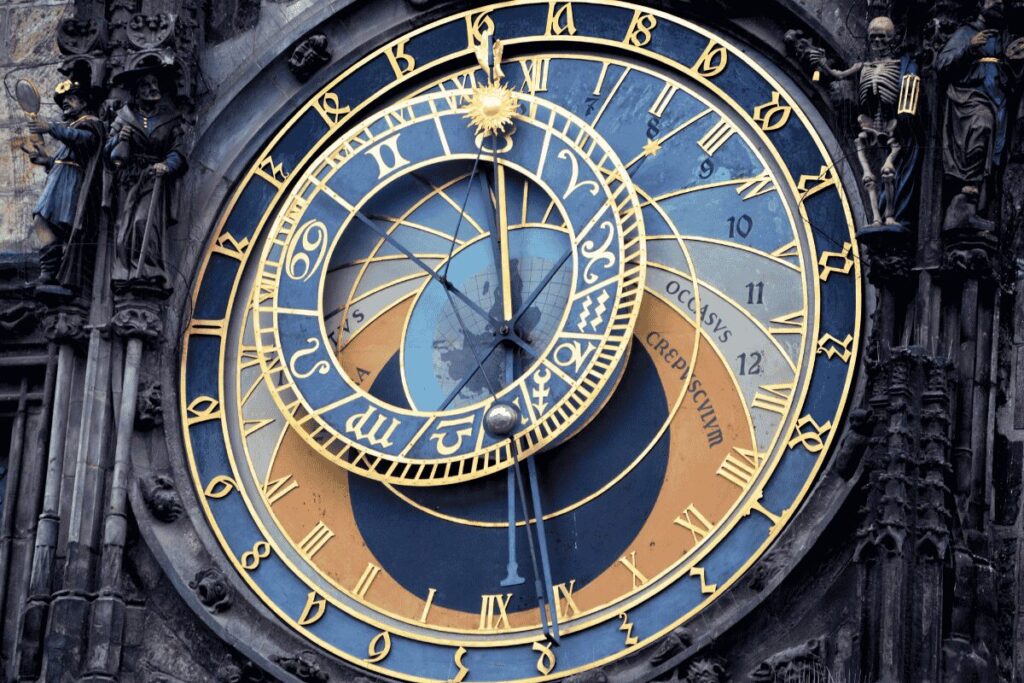
The Astronomical Clock on the southern wall of the Old Town Hall is one of the most photographed things in Prague. It dates back to 1410, making it one of the oldest working astronomical clocks in the world — and it does a lot more than just tell the time.
The clock face tracks multiple things simultaneously: the time, the position of the sun and moon, and the current zodiac sign. The real draw though is what happens on the hour, every hour between 8am and 11pm. Two small windows open and a parade of apostles moves across — each one carrying a different symbolic object. Around them, a cast of allegorical characters animate simultaneously, representing things like vanity and greed. A skeleton figure kicks off the whole sequence, and a rooster signals the end of it as the clock chimes.
It sounds elaborate because it is. Get there early if you want a decent spot, especially in peak season when it gets very busy very fast.
If you want to see it from a great vantage point with a coffee in hand, I cover the best nearby Starbucks location in my Prague Starbucks Guide.
Jan Hus Monument
Dominating the center of the square is the Jan Hus Monument, a striking bronze monument to the Czech theologian and reformer who was burned at the stake in 1415 for challenging the Catholic Church. It’s a powerful piece of public art in its own right — I go deeper on it in my Prague Free Art Guide.
A Few Things to Note
The restaurants directly on the square are often overpriced for what you get — skip them. The red umbrella tours that operate in this area are also best avoided. For solid food recommendations nearby, check out my Prague International Food Guide.
Memory, Protest & Modern Stories
Wenceslas Square
Wenceslas Square gives a completely different vibe compared to Old Town Square. Where Old Town is all cobblestones and Gothic spires, Wenceslas is broad, modern, and buzzing — more boulevard than square, really. But don’t let that fool you into thinking it lacks history.
This is where more recent Czech history happened. The square was the epicenter of the Velvet Revolution in 1989, when hundreds of thousands of people gathered here to demand an end to communist rule. It worked. Václav Havel, who would go on to become the first president of the post-communist Czech Republic, addressed the crowds here. There’s a weight to standing in that space once you know what took place there. At the top of the square stands the St. Wenceslas Statue, a monument to the patron saint of Bohemia that has become one of the most recognizable landmarks in the city.
John Lennon Wall
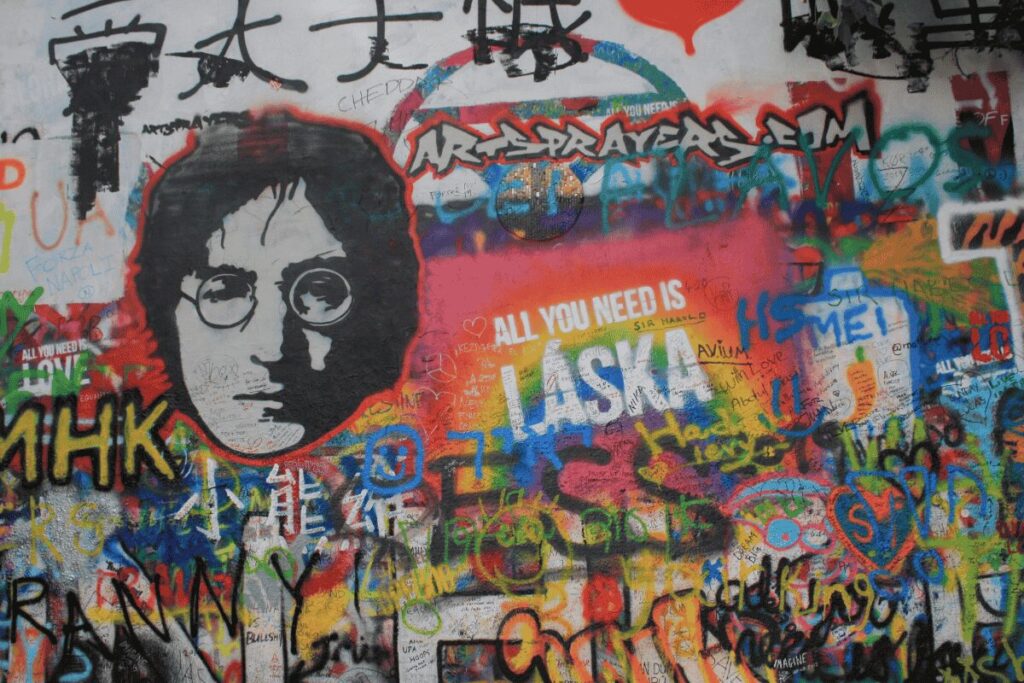
The John Lennon Wall is one of those Prague sights that hits you visually before anything else. It’s a constantly evolving explosion of color — covered in messages, portraits, peace symbols, and lyrics that have been painted and repainted since the 1980s when it became a quiet act of resistance against the communist regime.
It’s completely free to visit and if you’re drawn to this kind of public art, I go deeper on it in my Prague Free Art Guide.
Bridges & Riverfonts
Charles Bridge
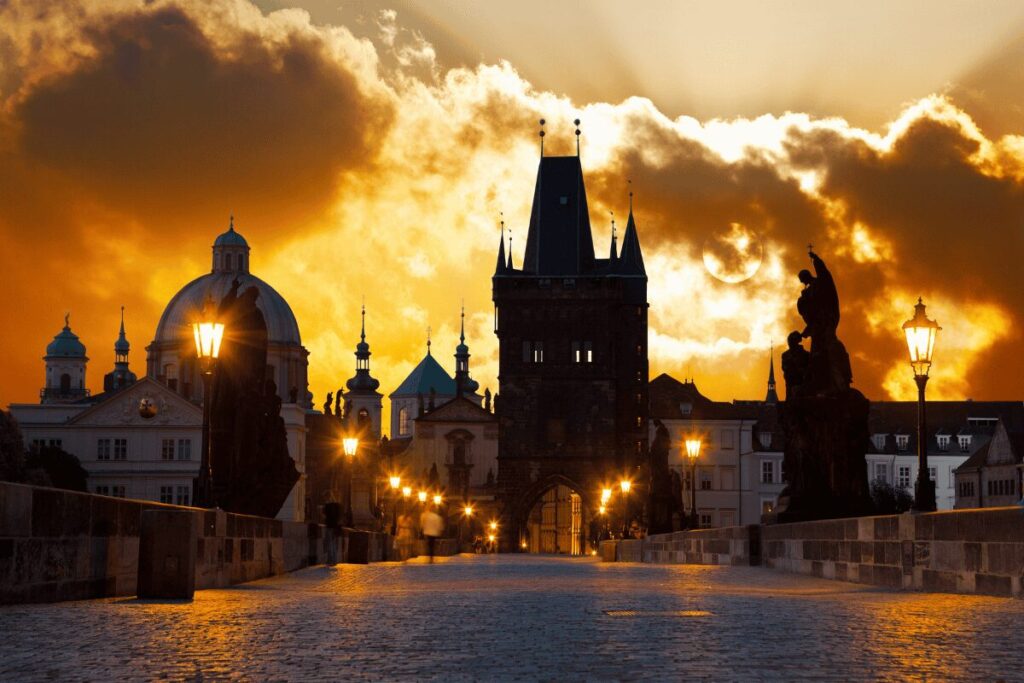
I’ll be honest — when I first moved to Prague in peak summer, I avoided Charles Bridge entirely. From a distance you could already see the absolute masses of people packed onto it, and that was enough for me to keep walking. It took me a few months before I finally crossed it, this time with my boyfriend on a quieter autumn day, and it was one of those Prague moments I won’t forget.
The bridge itself dates back to the 14th century and stretches across the Vltava connecting Old Town to Malá Strana. The 30 Baroque statues lining both sides are what make it feel like walking through an open air gallery — each one has its own story, and even if you don’t know the history behind them, the effect is striking.
It’s completely free to walk across, which still feels a little unreal given how iconic it is.
If you’re visiting in peak season and crowds aren’t your thing, go early morning or later in the evening. The bridge transforms completely with fewer people on it — and the light at both ends of the day is something else entirely.
Legion Bridge
Legion Bridge (Most Legií in Czech) is like the lesser known, more lowkey sister of Charles Bridge. You still get some absolutely beautiful views of Prague, just minus the wall-to-wall crowds. I’d especially recommend it if you’re out for a leisurely stroll along the river, or if crowds aren’t your thing — it sits just a short walk south along the embankment and gives you a great angle looking back toward Charles Bridge itself
The bridge also passes over Střelecký ostrov, a little island park you can access directly from the bridge — perfect if you want to stop and take it all in for a while. I cover it in my Free Parks in Prague guide if you want more details.
Dancing House
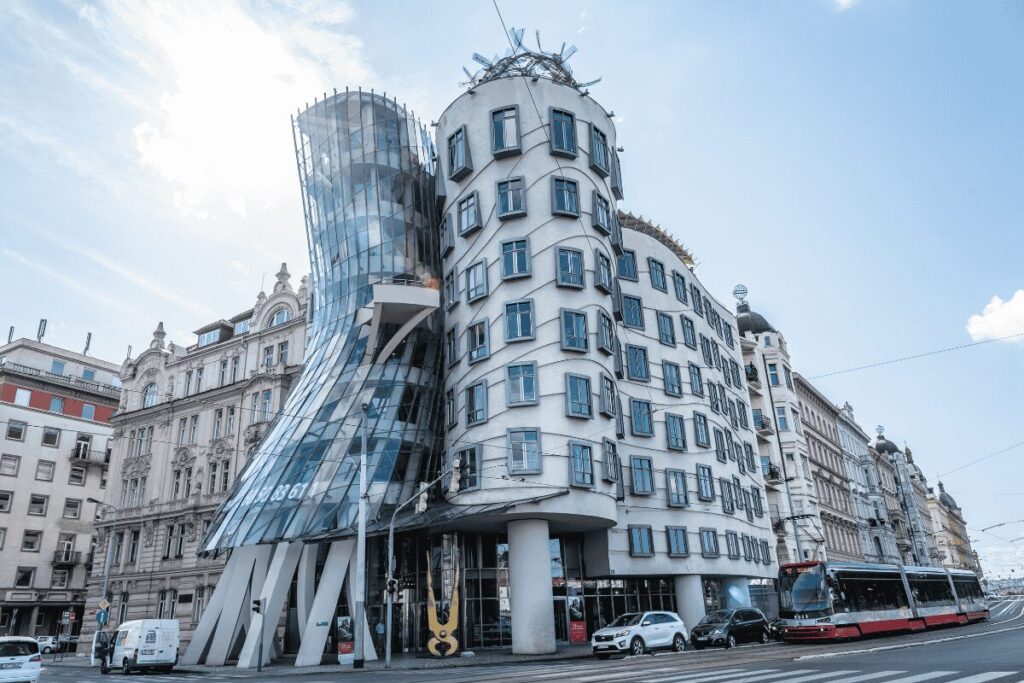
I still remember the first time I saw the Dancing House — I had just arrived in Prague for the very first time on a Flixbus from Germany, and it was the first thing that caught my eye.
Officially named the Fred and Ginger Building after the famous dancing duo it supposedly resembles, it sits right on the Vltava embankment next to Jirásek Bridge — the next bridge south from Most Legií, and another quiet, crowd-free crossing if you’re making your way along the river. The Dancing House itself is a post-1989 landmark, completed in 1996, and it stands out dramatically against the surrounding Baroque and Art Nouveau architecture in the best possible way.
Sacred Sites and Symbolism
Church of Our Lady before Týn
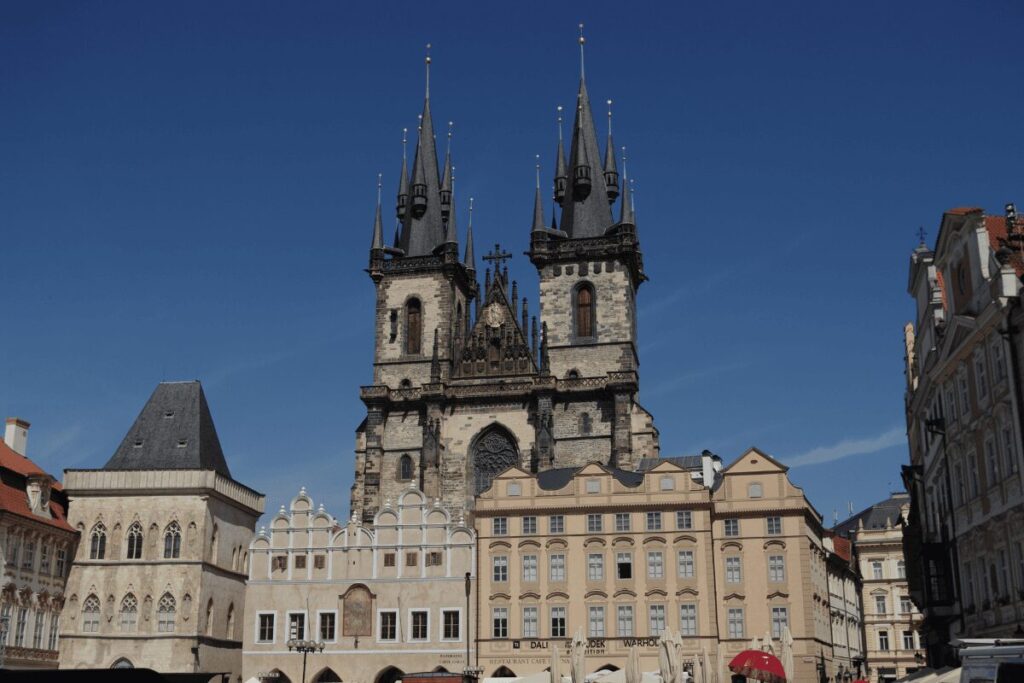
The Týn Church is one of the most recognizable features of the Old Town Square skyline — its twin Gothic spires rising above the rooftops are hard to miss. Construction began in the 14th century and it served as the main church of Prague’s Old Town for centuries. The exterior is completely free to take in, and from the square it’s a striking sight, particularly at night when it’s lit up.
St. Nicholas Cathedral, Old Town
Not to be confused with the more famous St. Nicholas in Malá Strana, this one sits directly on Old Town Square. It’s a Baroque church dating back to the early 18th century with a distinctive white facade. Free to view from the outside and worth a look while you’re already in the square.
Josefov — the Jewish Quarter
Josefov is one of those parts of Prague that stays with you. Walking through the streets of the former Jewish ghetto, the history is palpable in a way that’s hard to articulate — the neighborhood carries a weight that you feel before you even know the full story behind it.
The synagogue exteriors and cemetery walls are visible from the street at no cost, though entering the synagogues themselves requires a ticket. Before you go, I’d strongly recommend finding a free audio guide to the area — understanding the history behind what you’re looking at makes the experience significantly more powerful.
Final Thoughts
One of the best things about Prague’s historical sites is how close together most of them are. With a decent pair of walking shoes and a free day, you can take in most of this list without ever needing to hop on a tram. Even if you’re only in the city for a short time, these sites are manageable in a way that isn’t always the case in larger European capitals.
Prague punches well above its weight for budget travelers — and this is just the history. If you’re looking for more free experiences across the city, check out the rest of my Prague for Free series: Free Art in Prague, Free Parks in Prague, and Free Gardens in Prague. I also share more Prague tips on The Prague Edit, including guides to great cafés, local food spots, and how to navigate the city’s public transport