

Private Transport in Prague
Private transport in Prague has expanded dramatically in recent years. The number of licensed taxi vehicles in the city — including drivers operating through Uber, Bolt, and other platforms — has grown from less than 3,000 in 2017 to more than 16,000 by 2024.
That growth reflects something visitors notice quickly: booking a ride in Prague is easy. Cars are widely available, app-based platforms are regulated, and pricing is transparent.
At the same time, Prague’s public transport system is efficient and extensive — which which means a private ride isn’t always the right call.
In this guide, I’ll break down when it makes sense to book a ride, when public transport is the better option, and how to decide based on your situation. Want a fast recommendation? Skip ahead to the quick quiz.
Uber, Bolt, and Taxis in Prague: What You Need to Know
Uber
Uber has been operating in Prague for over a decade and is fully legal and widely available. It works exactly like you’d expect — download the app, enter your destination, and a driver comes to you. Also, Uber is the official taxi provider for Václav Havel Airport, meaning you can book directly from the app. For a ride from the airport to the city center, expect to pay around 600 CZK (~$29) with Uber Airport. Short rides within the city typically run around 120–145 CZK (~$6–7).

Bolt
Bolt is Uber’s main competitor in Prague and is arguably even more popular with locals. It works the same way — app-based, easy to use, available across the city — but tends to run a bit cheaper than Uber for standard rides. If you have both apps downloaded, compare the prices before booking, especially during peak hours when surge pricing can kick in on either platform.
Bolt also offers car rentals through Bolt Drive, which launched in 2024 and doesn’t get talked about enough. If you need a car for a day trip outside the city, it’s incredibly convenient — my boyfriend used it to pick my dad up from the airport and it was seamless. Pricing starts from around 3 CZK (~$0.15) per minute and 5 CZK (~$0.25) per kilometer, with cars like the Audi Q2 and Volvo V90 bookable directly through the app.

Traditional Taxis
Traditional taxis are still around, though far less common than they used to be. Prague has cracked down on the overcharging that was once a real issue — particularly around tourist areas — but it’s still best to book through a reputable app like Liftago rather than hailing one off the street. Official taxis are metered with a maximum legal fare of 36 CZK (~$1.75) per km, so if something seems off, trust your gut.
Price Comparison: Public vs. Private
To put it in perspective: a 90-minute public transport ticket covers most journeys in Prague for around 46 CZK (roughly $2) via the PID app. A comparable Uber or Bolt ride across the city center might run 150–250 CZK (~$7–12) depending on traffic and time of day. For solo travel, public transport wins on price almost every time. For groups or convenience, the gap closes quickly.
Hop-On Hop-Off Bus: An Alternative Option
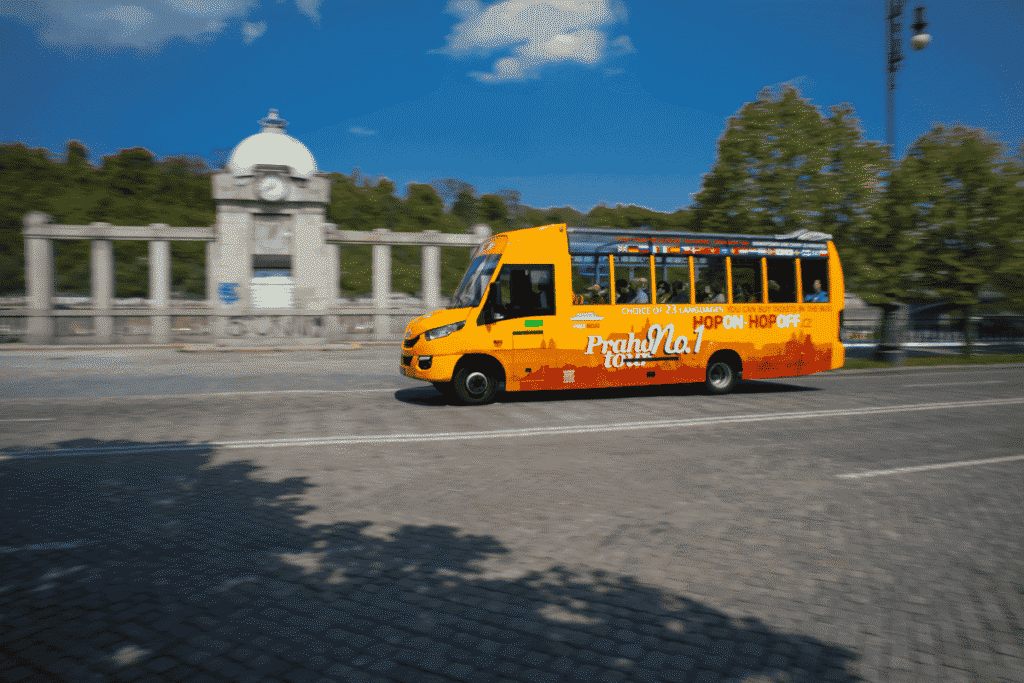
If figuring out public transport or ride-hailing in a new city feels like too much,, a hop‑on hop‑off sightseeing bus is hard to beat for a first visit. It is not how locals get around and it is definitely not the cheapest option, but it is designed for one specific purpose: letting you see the main sights at your own pace without worrying about tickets, transfers, or language.
When my mom visited Prague during a week I had classes, she did the Hop-On Hop-Off on her own for a day, and it was the right call. She got to see Charles Bridge, the Old Town Square, and more — all without having to navigate an unfamiliar transport system or coordinate rides in a country where she didn’t speak the language. It took the stress completely out of the day.
Most operators run at least two color‑coded routes (often called something like a Red line and a Blue line) that loop past major stops such as Prague Castle, Wenceslas Square, the Dancing House, and Charles Bridge. Tickets are usually valid for 24 or 48 hours, buses tend to come roughly every 30–60 minutes depending on the route and season, and prices commonly start around $33 for a basic 24‑hour ticket. Audio guides in multiple languages are standard, so you get commentary as you ride.
A few honest caveats: buses don’t run particularly late, frequency can be lower than you’d expect, and Prague’s public transport is genuinely so good that for most people it’s the better option. But for a low-stress solo sightseeing day — or for visiting family members who just want to see the highlights without the hassle — it’s worth looking into.
What I’d Recommend After Living in Prague
When Private Transport Makes Sense

There are moments in Prague when booking a ride just makes life easier.
- Late at night when you don’t want to wait for a night tram or bus.
Prague’s night network is reliable, but if it’s 1:00 AM and you’re tired, a 10-minute Bolt can feel worth every CZK. - When you’re traveling with 3–4 people.
Once you split the fare, the cost difference between public and private transport shrinks quickly. - If you’re carrying heavy luggage.
Prague’s cobblestones, stairs, and tram transfers are charming — until you’re dragging a suitcase uphill. - If navigating public transport feels overwhelming.
There’s nothing wrong with choosing the option that feels simplest and most comfortable — especially when you’re adjusting to a new city.
Private transport in Prague isn’t usually necessary — but it’s easy to use and affordable compared to many other European cities.
When it Doesn’t

If you’re open to trying public transport in Prague, these are the situations where I’d personally choose it over ordering a ride.
- If you’re traveling solo during the day.
A 90-minute ticket costs around 46 CZK (about $2 USD). At that price point, it’s significantly more wallet-friendly than a single 200 CZK ($8–9 USD) ride using Bolt or Uber. - If you’re staying near a metro or direct tram line.
Prague’s metro is fast, clean, and extremely reliable. In many cases, it’s actually quicker than sitting in traffic. - If you’re in central Prague.
Many rides within Old Town, New Town, or across the river are short enough that a tram — or even walking — makes more sense. - If you’re on a tight budget.
Public transport in Prague is one of the best-value systems in Europe. For most visitors, it’s the go-to for good reason.
Mistakes I Made (So You Don’t Have To)

1. I didn’t compare Bolt and Uber.
When I first moved to Prague, I defaulted to Uber because it was what I used in the U.S. I assumed pricing would be similar across platforms. It wasn’t. After I downloaded Bolt, I realized I’d been consistently overpaying.
Pro tip: Always open both apps before booking. The difference can easily be 50–100 CZK (~$2.50–5) depending on time and demand.
2. I assumed private transport would always be faster.
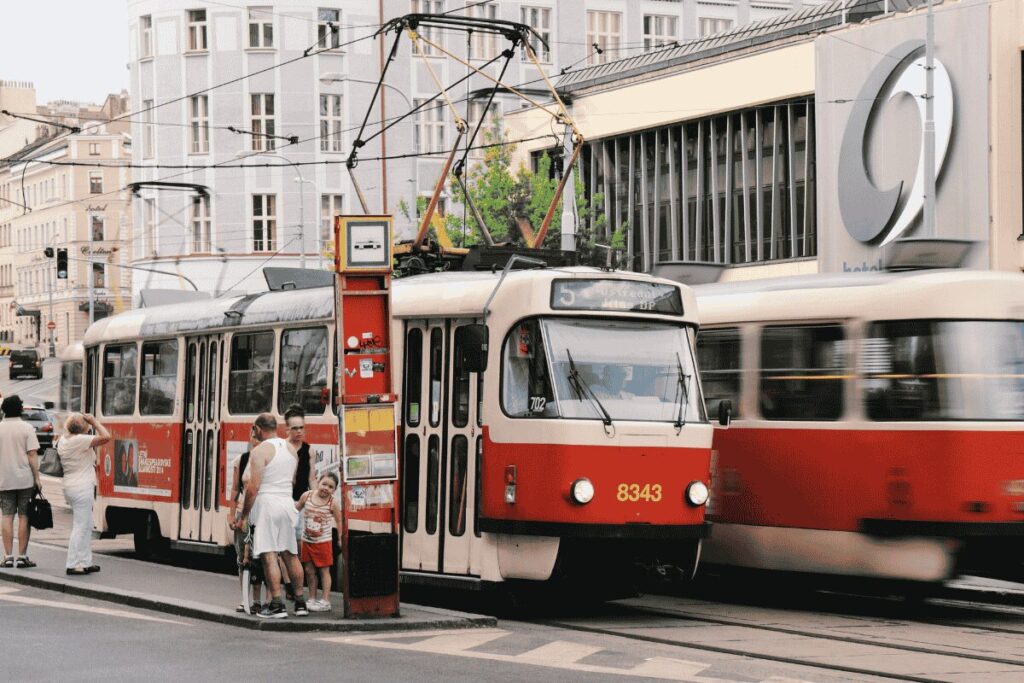
One morning I had a visa appointment that ran late before class. I checked the tram routes quickly and thought ordering an Uber would save time. What I didn’t account for was rush hour traffic. The Uber ended up taking longer than the tram would have — and cost significantly more.
Pro tip: In a time crunch? Check traffic conditions on Google Maps before committing to a ride.
3. I underestimated how good Prague’s public transport actually is.
Coming from the U.S., I assumed rideshare would be the easiest option. But Prague’s metro, tram, and bus network genuinely surprised me — and in many cases it’s faster and cheaper.
Pro tip: Don’t assume private transport is the “upgrade.” In Prague, public transport is world-class.
Staying Safe with Private Transport in Prague
In my time living in Prague, I never once felt uneasy using private transport — even traveling alone at night. Drivers are registered, the license plate must match what’s shown in the app, and rides are GPS-tracked from start to finish.
Here are a few things about private transport in Prague to give you peace of mind:
- App-based rides are traceable.
Your trip is recorded, and you can share your ride details with someone in real time. - You see driver ratings before getting in the car.
I always check the rating and number of completed trips — it takes two seconds. - You know the price upfront.
No negotiating, no surprises at the end of the ride.
That said, I still take the same basic precautions I would in any city:
- Double-check the license plate before getting in.
- Share your ride details if it gives you peace of mind. My friends and I always did this when ordering a ride home after a night out.
Quick Quiz: Which Option is Right For You?
When you’re tired, carrying heavy luggage, or navigating a new city, decision fatigue is real. This mini quiz helps you pick the option that makes the most sense for you.
Public or Private Transport?
Choose A or B for each question, then click “Show my recommendation.”
Final Thoughts

Private transport in Prague works well — but it’s rarely your only good option.
After living here, the thing I’d tell every visitor is that Prague’s public transport can hold its own. In many situations it’s just as practical — if not more — than booking a ride.
Still, there are moments when a private ride makes sense: late nights, heavy luggage, tight schedules, or simply when you’d rather not navigate a new system. If you’re arriving in Prague, my guide to getting from Prague Airport to the city center breaks down all the for how to get from the airport to the city center.
If you’d like a step-by-step breakdown of how public transport works — including ticket types, routes, and transport options — I’ve written a detailed Public Transport Guide that walks through everything you need to know. You can find all of my guides about getting around in Prague below.
More Prague Transport Guides
Prague gives you strong options on both sides. The best choice depends on your priorities that day — cost, timing, comfort, or simplicity. If you’re planning your trip and have questions about transport in Prague, leave a comment below or get in touch — I’m always glad to help.